KS Learning can provide extra lessons for maths from gcse maths tutors in London and help with gcse maths past papers, gcse maths revision notes, and gcse maths revision worksheets. Maths private tuition at its tuition centre can improve maths knowledge and performance through maths lessons, mathematics tutorials and maths tuition Twickenham.
| Question | Answer |
|---|---|
| Which organisms perform respiration? | all organisms including plants and animals |
| When does respiration take place in plants and animals? | it takes place constantly as both need a constant supply of energy |
| Why do organisms perform respiration? | energy is vital for the body to function and without it they would die |
| What chemicals are needed for aerobic respiration? | glucose and oxygen |
| What are the waste products of aerobic respiration? | carbon dioxide and water |
| Why is it called aerobic respiration? | because it requires oxygen |
| What type of reaction is aerobic respiration? | it is exothermic as it gives off energy |
| State the word equation for respiration | glucose + oxygen → carbon dioxide + water + energy |
| Write the symbol equation for respiraton | C6H12O6 + 6O2 → 6CO2 + 6H2O + energy |
| How much energy on average do teenagers need each day? | a teenage boy needs around 11510kJ and a teenage girl needs around 8830kJ per day |
| Why do girls need less energy than boys? | girls are on average smaller than boys and boys have on average more muscle than girls |
| What is the role of the nucleus in respiration? | it holds the genetic code for enzymes involved in respiration |
| What is the role of the cytoplasm in respiration | it is the location for the making of enzymes used in respiration and the location for the organelles that perform respiration |
| What is the role of the mitochondria in respiration? | it contains the enzymes for aerobic respiration and is where most of aerobic respiration takes place |
| What is the role of the cell membrane in respiration? | it allows the gases and water involved in respiration to pass in and out the cell |
| Where exactly does aerobic respiration take place? | most of the chemical reactions that make up aerobic respiration take place in the mitochondria |
| What is aerobic respiration? | a series of enzyme controlled chemical reactions that release energy in living organisms |
| What are mitochondria? | tiny rod-shaped organelles found in almost all plant, animal, algal, and fungal cells |
| How is the inside of mitochondria adapted to respiration? | they have a folded inner membrane that provides a large surface area for the enzymes of aerobic respiration |
| What does the number of mitochondria in a cell indicate? | it shows how active the cell is |
| Describe two ways in which cells use the energy produced by respiration. |
• to build new chemicals as in protein synthesis • to break down large molecules as in digestion |
| Describe an example where animals use the energy produced by respiration. | the energy of respiration is used to make muscles contract such as heart beats and breathing |
| How do mammals and birds stay warm? | energy from respiration is used to maintain a constant internal environment |
| Describe two examples of plants using the energy from respiration. |
• to move mineral ions like nitrates from the soil into the root hair cells • to convert sugars and nitrates to amino acids for building proteins |
| Question | Answer |
|---|---|
| What do skeletal muscles do for the human body? | they enable movement and support the body against gravity |
| Why is the role of muscle in the heart? | it enables the heart to beat to pump blood around the body |
| What is the role of muscle in the digestive system? | muscles move food through the digestive system |
| What shows that muscle cells need a lot of energy? | they contain a lot of mitochondria |
| Name the process that releases energy to enable muscles to work. | aerobic respiration |
| Describe muscle tissue |
• it is made up of protein fibres that contract • the cells contain a lot of mitochondria • muscle fibres occur in large blocks or groups • they contract or relax to cause movement • they store glucose as glycogen |
| How is glucose stored in muscle tissue? | as glycogen |
| Why is glucose stored as glycogen? | because it can be turned back into glucose quickly when needed, and large stores of glucose in a cell would affect the osmotic pressure of the cell |
| Write the word equation for respiration. | glucose + oxygen → carbon dioxide + water + energy |
| Write the symbol equation for respiraton | C6H12O6 + 6O2 → 6CO2 + 6H2O + energy |
| What is the effect of exercise on muscles? | it makes muscles work harder and faster |
| What do muscles need to work harder during exercise? | increased amounts of energy |
| Where do muscles get energy? | from respiration in the cells |
| Muscles produce increased amounts of what unwanted substance during exercise? | carbon dioxide |
| What changes take place in the body when muscular activity increases? |
• heart rate increases • blood vessels supplying the muscles dilate • breathing rate increases • breathing is deeper • stored glycogen is converted back into glucose |
| What is the effect of increased heart rate and the dilation of arteries? |
• the flow of oxygenated blood to the muscles is increased • this increases the supply of oxygen and glucose to muscle cells • which increases the rate at which cellular respiration can take place • and increases the rate at which carbon dioxide is removed |
| What is the effect of increased breathing rate and deeper breaths |
• this means that the individual breathes more often and brings more air into the lungs each time • the rate at which oxygen is brought into the body is increased • this means that the rate at which oxygen is picked up by red blood cells is increased • which in turn means that more oxygen reaches the exercises muscles and faster • it also means that more carbon dioxide can be removed from the lungs and faster |
| What is the effect of converting glycogen back to glucose? |
• the amount of glucose available for respiration is increased • this in turn means more energy is available to the muscle cells during exercise |
| Summarise the purpose of the body changes in response to exercise. |
• cellular respiration increases to provide the increased energy demands of exercise • the cells are provided with an increased supply of oxygen and glucose to support the increased rate of cellular respiration • carbon dioxide removal is increased to deal with the increased levels of carbon dioxide due to increased respiration |
| Question | Answer | |
|---|---|---|
| Name two types of respiration. |
• aerobic respiration • anaerobic respiration |
|
| What is aerobic respiration? | respiration using oxygen | |
| What is anaerobic respiration? | respiration without using oxygen | |
| Which type of respiration is done during respiration? |
• as long as their is sufficient oxygen, the body will always do aerobic respiration • when the body cannot supply oxygen at the rate needed to supply the energy needed, anerobic respiration will begin • aerobic respiration is always preferred |
|
| Why is aerobic respiration prefered to anaerobic respiration? | aerobic repsiration is much more efficient at producing energy from glucose | |
| Why is aerobic respiration more efficient that anaerobic respiration? | because glucose is not broken down fully during anaerobic respiration | |
| What are the products of anaerobic respiration in animals? | lactic acid and energy | |
| State the equation for anaerobic respiration. | glucose → lactic acid + energy | |
| What happens to muscles fibres when used vigorously for a long time? | they become fatigued and stop contracting efficiently | |
| Name a cause of muscle fatigue? | the build-up of lactic acid due to anaerobic respiration | |
| What does the build-up of lactic acid create? | an oxygen debt | |
| What is the difference between a fit and unfit person in respect of respiration? |
• the lungs and heart of a fit person can supply more oxygen for longer than an unfit person • it thus takes longer before the fit person starts to respire anaerobically • the fit person will thus take longer to tire and to start building up lactic acid |
|
| What must be done with the lactic acid that results from anaerobic respiration? | the body must get rid of it as it is harmful to cells | |
| What ia the problem with getting rid of lactic acid? | it cannot be breathed out like carbon dioxide | |
| What is done to remove lactic acid? | oxygen is used to break it down into carbon dioxide and water | |
| What is oxygen debt? | the amount of oxygen needed to break down the lactic acid down to carbon dioxide and water | |
| Why do you continue to breathe quickly and deeply after exercise? |
• to obtain the oxygen needed to pay off the oxygen debt • the greater the oxygen debt, the longer the puffing and panting will continue • the fitter a person, the smaller the oxygen debt created | |
| Write the equation for oxygen debt repayment. | lactic acid + oxygen → carbon dioxide + water | |
| Is anaerbic respiration peculiar to animals? | no, plants and microorganisms can also respire without oxygen | |
| What do plants produce when they respire anaerobically? | ethanol and carbon dioxide | |
| Name a food use of anaerobic respiration using bacteria. | making yoghurt where the bacteria produce ethanol and carbon dioxide | |
| What is fermentation? | yeast respiring anaerobically to produce ethanol and carbon dioxide | |
| Name 2 uses of fermentation. |
• making bread • producing alcoholic drinks |
|
| Write the equation for anaerbic respiration in plants. | glucose → ethanol + carbon dioxide |
| Question | Answer |
|---|---|
| What is the metabolism of an organism? | the sum of all the reactions that take place in the cell or in the body |
| What is the energy produced in respiration used for? |
• some of the energy simply heats the environment • some of the energy is used for the enzyme-controlled processes of metabolism |
| How many metabolic reactions are there? | hundreds of thousands |
| List 6 of the most common metabolic reactions. |
• the conversion of glucose to starch, glycogne, and cellulose • the formation of lipid molecules • the formation of amino acids • the reactions of respiration • the reactions of photosynthesis • the breakdown of excess protein |
| What chemicals are used to make a lipid molecule? | a molecule of glycerol and three fatty acids |
| What compounds are used to make an amino acid? | glucose and nitrate ions |
| What happens to excess proteins? | they are broken down in the liver to form urea for excretion in the urine by the kidneys |
| What does the liver look like? | it is a large reddish brown organ |
| What happens when the liver is damaged? | liver cells grow and regenerate themselves rapidly |
| List four metabolic functions carried out by the liver/ |
• detoxifying poisonous substances such as ethonal from alcoholic drinks • passing the breakdown products into the blood so they can be excreted in the urine via the kidneys • breaking down old, worn out blood cells and storing the iron until it is needed to synthesise more blood cells |
| Where and when is lactic acid produced? | by the muscles in anaerobic respiration |
| What happens to the lactic acid produced by the muscles? | it is transported by the blood to the liver where it is converted back to glucose |
| When has the oxygen debt been repaid? | two things have to happen for the oxygen debt to be repaid 1. the lactic acid has been converted back to glucose, and 2. the glucose has been broken down in carbon dioxide in respiration |
| What happens to glucose that is not needed at the time it is produced? | it is converted to glycogen and stored in the liver until needed |
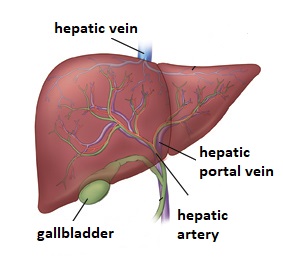
| What does the hepatic vein do? | it carries blood from the liver to the heart with the levels of food adjusted |
| What does the hepatic artery do? | it brings oxygenated blood to the liver |
| What does the hepatic portal vein do? | it carries blood containing digested food from the intestines to the liver |
| What is the weight of the liver? | approximately 1.5kg |
| Sketch and label a diagram of the liver. |
|
A good tutor can build the confidence of a learner enabling subject success
A private tutor can improve the skills a pupil needs to master a subject
Regular tutoring can drive progress and better results in school subjects
Support can help students and parents make the right academic decisions